Uplift capacity of suction caisson: suctionCaission
Prepared by Philip Cardiff, Ivan Batistić, and Tian Tang
Tutorial Aims
- Demonstrate the poro-elasto-plasticity soil model
- Demonstrate the vertical uplift capacity of suction caisson foundations
Case Overview
This case demonstrates vertical uplift of a suction caisson foundation, a common problem in offshore geotechnical engineering. A suction caisson is open at the bottom and closed at the top. It penetrates the seabed under its own weight and by generating an internal under-pressure relative to the external water pressure [1]. The passive suction that develops inside the soil plug increases the pullout capacity of the caisson.
The case was adapted, with modifications, from Tian Tang's minigeotechfoam cases [3].
Figure 1 shows a cylindrical suction caisson with overall diameter \(d\) and embedded length \(L\). The caisson is subjected to an uplift displacement at the top. In the current case, the caisson wall spans radii \(1.0\) m to \(1.1\) m, giving a wall thickness of \(0.1\) m.
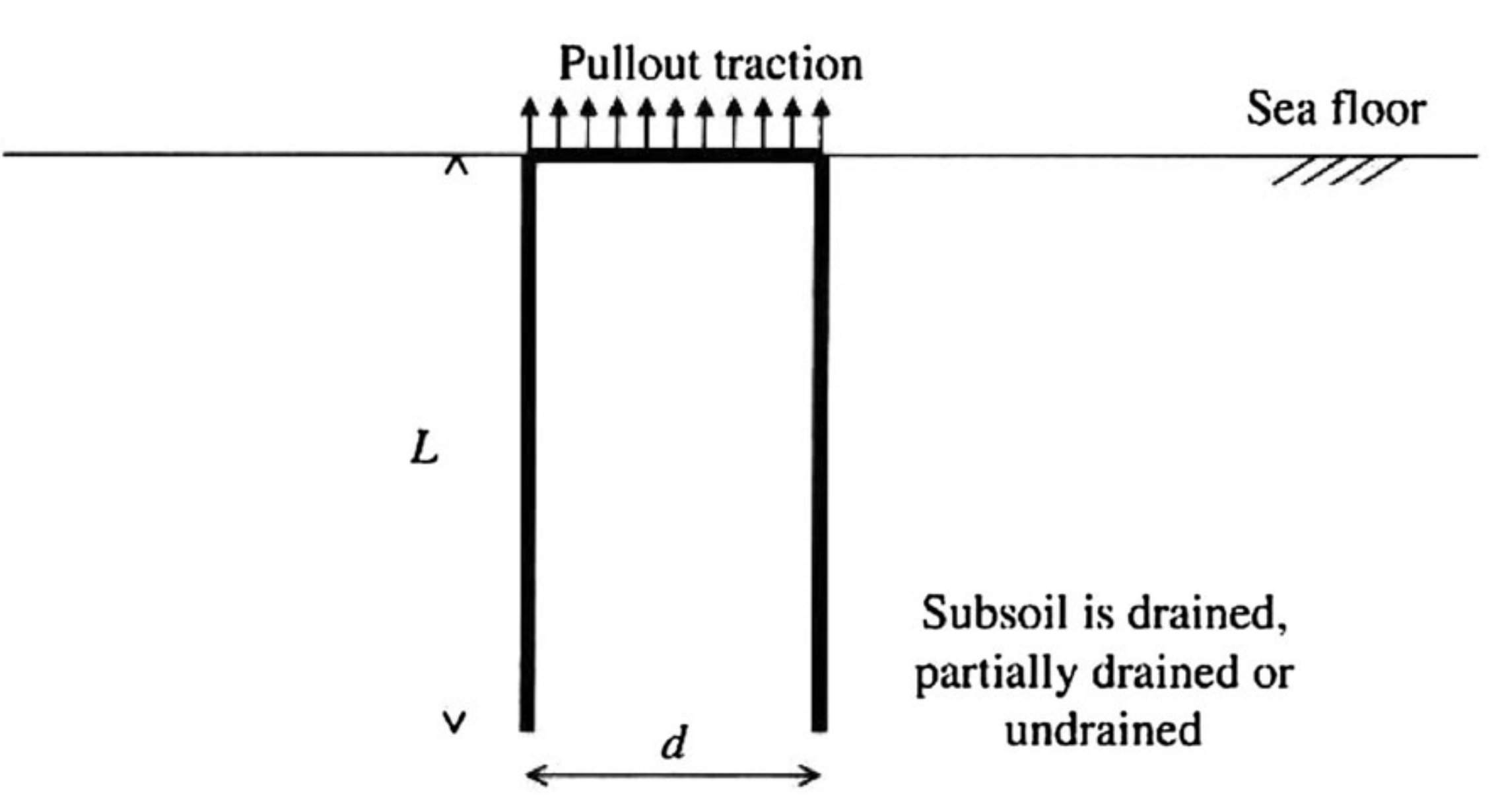
Figure 1 - Suction caisson foundation under vertical uplift loading [1,2]
Table 1 - Geometry, soil, pore-fluid, and loading properties reported in [1,2]
| Parameter | Symbol | Value |
|---|---|---|
| Embedment depth | \(L\) | \(1\) m |
| Diameter | \(d\) | \(2\) m |
| Young's modulus | \(E\) | \(2\cdot10^7\) Pa |
| Poisson's ratio | \(\nu\) | \(0.3\) |
| Hydraulic conductivity | \(k\) | \(0.001\) m/s |
| Porosity | \(n\) | \(0.2\) |
| Water specific weight | \(\gamma_w\) | \(1\cdot10^4\) N/m\(^3\) |
| Water bulk modulus | \(K_w\) | \(2.1\cdot10^9\) Pa |
| Degree of saturation | \(S_r\) | \(0.98\) |
| Friction angle | \(\phi\) | \(30^\circ\) |
| Dilation angle | \(\Psi\) | \(0^\circ\) |
| Cohesion | \(c\) | \(1\cdot10^5\) Pa |
The case uses blockMesh to discretize one quarter of the three-dimensional domain, as shown in Figure 2.
The reference pullout velocities range from \(2\cdot10^{-4}\) to \(2\cdot10^{-1}\) m/s.
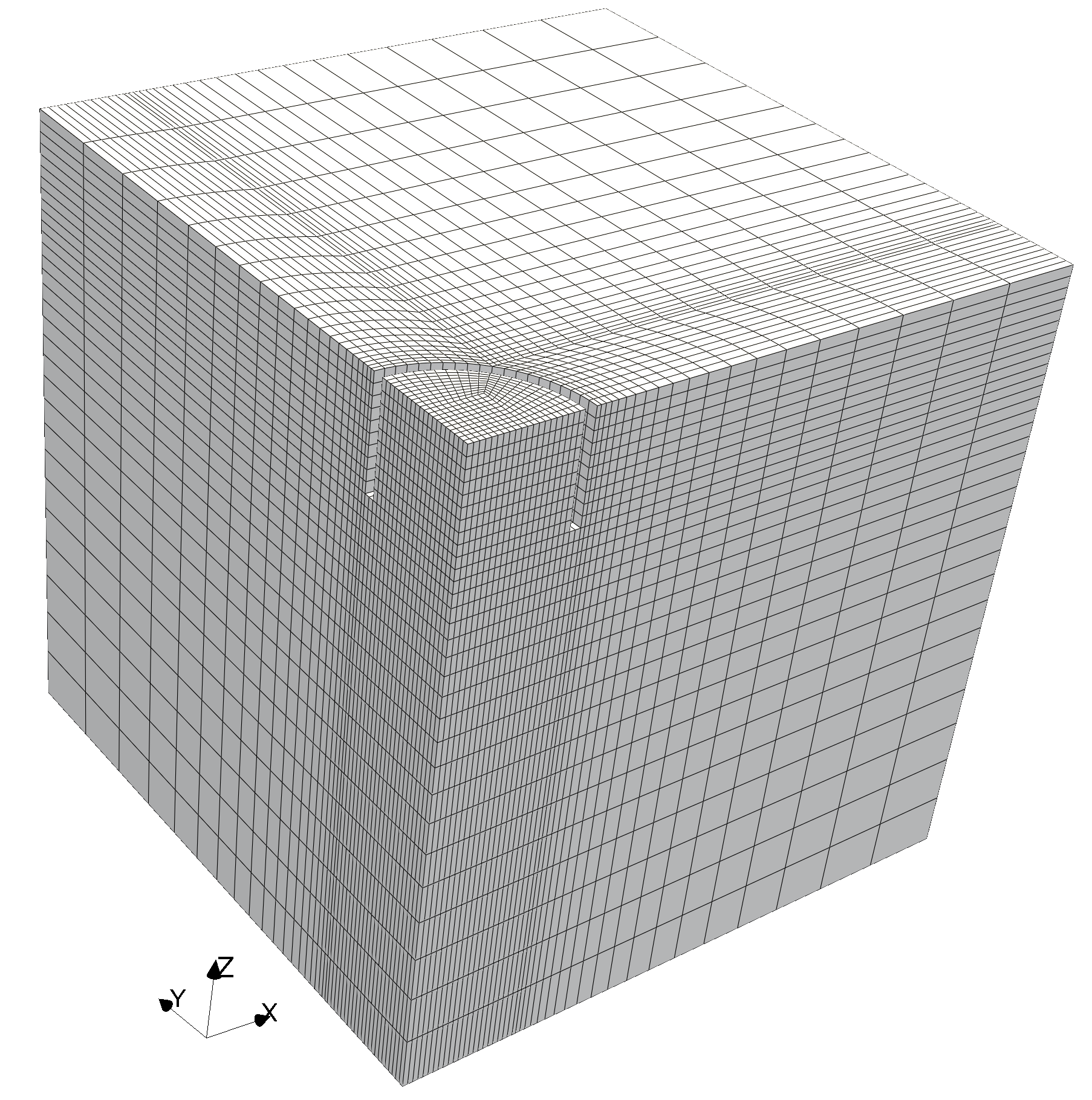 Figure 2 - Computational mesh for one quarter of the geometry
Note: Tang et al. [2] is using an axisymmetric setup with a
wedgeboundary condition. The current tutorial uses a quarter-domain mesh with symmetry conditions.
The soilStructureInterface patch is prescribed an uplift displacement using constant/timeVsDisp. In the current case, the displacement increases from \(0\) to \(0.2\) m over \(5\) s.
Expected Results
The primary result is the pullout load-displacement response of the caisson. Faster loading rates give larger pullout capacities, see Figure 3 [2]. This occurs because rapid uplift allows significant negative pore pressure, or passive suction, to build up and persist inside the caisson. For slower loading rates, the excess pore pressure has more time to dissipate, so the pullout resistance is lower.
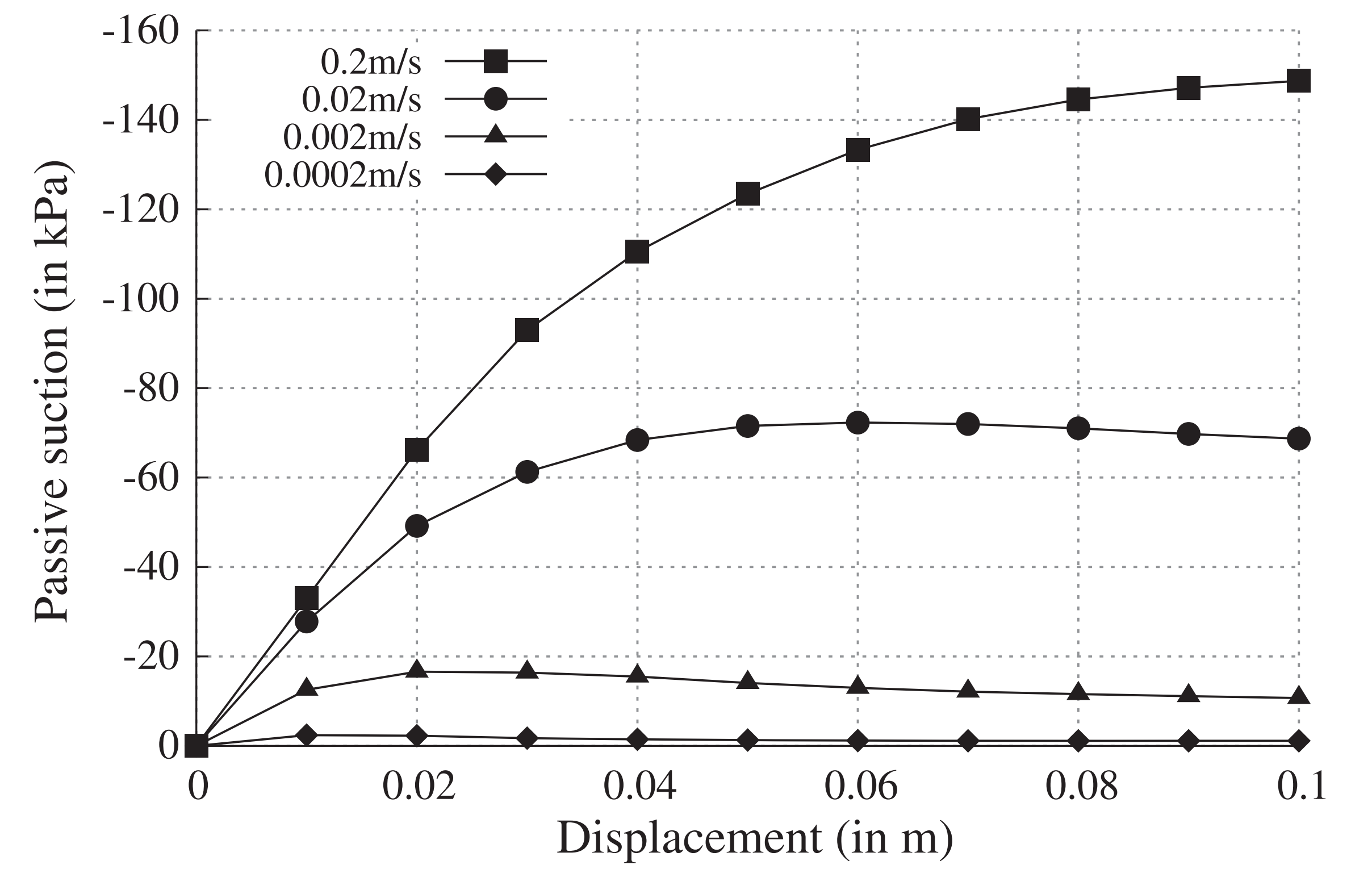
Figure 3 - Comparison of passive suction under different loading rates [2]
Running the Case
The tutorial case is located at solids4foam/tutorials/solids/poroelasticity/suctionCaission. The case can be run using the included Allrun script:
./Allrun
The script creates the mesh using blockMesh and then runs the solids4Foam solver.